Haller Index self-assessment
Estimate the depth of your chest at home
The Haller Index is a simple ratio doctors use to describe how deep a pectus excavatum (sunken chest) is — the width of the chest divided by its depth at the deepest point. Because you can’t reach behind your own chest to measure that depth directly, this tool works it out in a doable way: measure your overall chest height, then subtract how deep the dip is. It is an educational estimate only, not a diagnosis — the true index is measured on a CT or MRI scan.
How to take your measurements
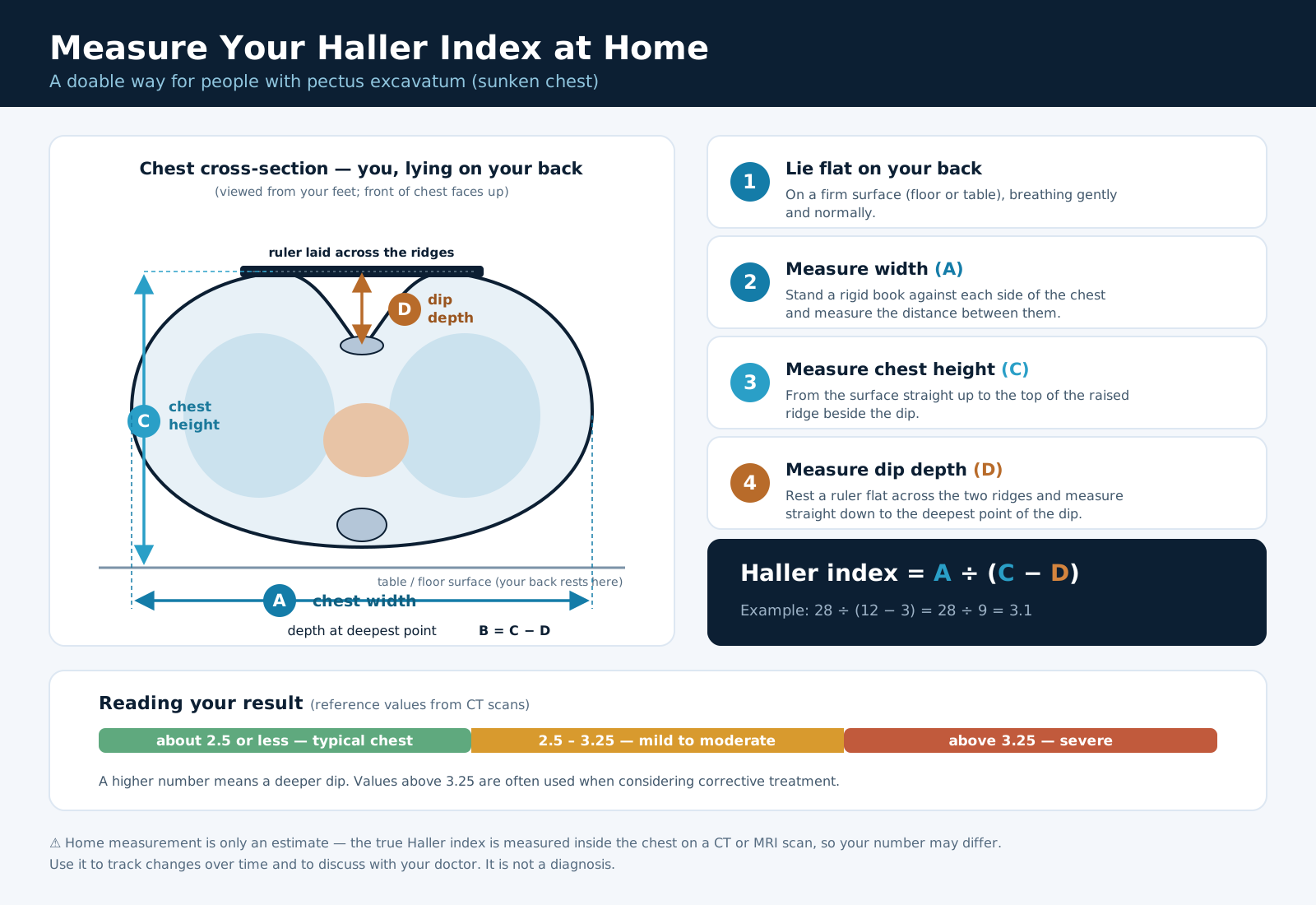
- Lie flat on your back on a firm surface (floor or table), breathing gently and normally.
- Width (A): stand a rigid book or board upright against each side of the chest and measure the distance between them.
- Chest height (C): measure straight up from the surface to the top of the raised ridge beside the dip.
- Dip depth (D): rest a ruler flat across the two ridges and measure straight down to the deepest point of the dip.
Your depth at the deepest point is B = C − D, and the index is A ÷ B.
Enter your numbers
typical
mild–moderate
severe
Because the Haller Index is a ratio, you get the same result whether you measure in centimeters or inches — just use the same unit for both.
Medically reviewed by Dr. Kashif Irshad, MD, MSc, FRCSC · Last updated August 2026
Think you may benefit from an assessment?
A referral from your family doctor or specialist is all that’s needed to be seen by Dr. Irshad, who reviews your imaging and discusses your options.
Referral information →