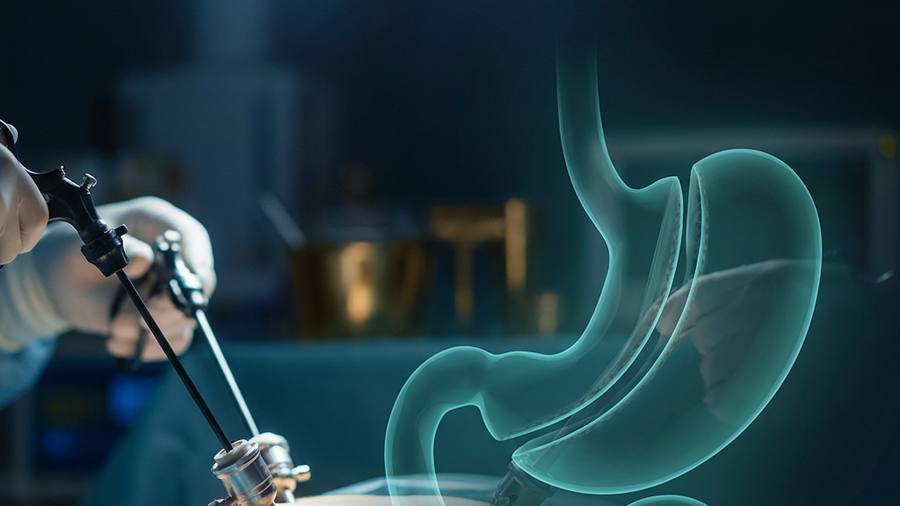
Weight loss surgery
Minimally invasive bariatric surgery
 Dr. Irshad holds certification from the American Board of Obesity Medicine
Weight-loss (bariatric) surgery helps people with obesity lose a significant amount of weight and improve or resolve conditions like type 2 diabetes, high blood pressure and sleep apnea. Dr. Irshad performs these operations with keyhole techniques, and offers the Sleeve Nissen — a combined procedure for patients who also have bad reflux.
What is bariatric surgery?
It’s surgery that reduces the size of the stomach so you feel full sooner and eat less, and it changes the hormones that control hunger. The most common operation is the sleeve gastrectomy. It works best alongside long-term changes to eating and activity.
Who is it for?
- Adults with a BMI of 40+, or 35+ with weight-related conditions like diabetes or sleep apnea
- People who haven’t reached their goals with diet and medication
- Those ready for life-long follow-up and healthy changes
How it works
- A full assessment by the bariatric team
- Keyhole surgery to create the sleeve
- For patients with reflux, a Sleeve Nissen adds an anti-reflux wrap
- Nutrition and follow-up support afterwards
The Sleeve Nissen
- Combines a sleeve gastrectomy with a Nissen anti-reflux wrap in one keyhole operation
- An option at the hospital for patients with morbid obesity and a symptomatic hiatus hernia
- Evidence shows weight loss equal to the sleeve alone, with far less reflux
Patient tool · Weight loss surgery
BMI & eligibility check — do you meet the usual criteria?
Body Mass Index (BMI) is the starting point bariatric teams use when assessing eligibility for surgery. Enter your height and weight to see your BMI and how it relates to the usual criteria. It is for information only — not a diagnosis or a guarantee of eligibility.
Please enter a valid height and weight.
BMI is a screening measure and does not account for muscle mass, ethnicity-specific risk, or overall health. Eligibility for surgery is always determined by a full assessment. This tool does not diagnose any condition or replace assessment by your doctor.
Keyhole bariatric surgery
All procedures are done laparoscopically through small cuts, which means less pain and a quicker recovery. As a diplomate of the American Board of Obesity Medicine, Dr. Irshad treats obesity as a medical condition — combining surgery with medical and nutritional care.
For patients with both obesity and reflux, the Sleeve Nissen treats both at once.
Your recovery, step by step
Most patients follow a special low-calorie “liver-shrinking” diet for about 2 weeks beforehand. This makes the operation safer and easier.
Typically 1–3 nights, depending on the procedure.
Most patients return to light activity.
60–80% of excess weight is typically lost — individual results vary.
Major improvement or remission of type 2 diabetes, high blood pressure and sleep apnea, with ongoing follow-up.
Common questions
Who is a candidate for bariatric surgery?
What is the Sleeve Nissen, and who is it for?
Does the Sleeve Nissen affect weight-loss results?
What is eating like after surgery, and will I need vitamins?
How does surgery compare to weight-loss medications like Ozempic?
Is weight-loss surgery safe?
How do I get a referral?
Private sleeve surgery
Gastric sleeve surgery at 360 Sleeve
Dr. Irshad performs gastric sleeve gastrectomy at 360 Sleeve, a private bariatric clinic in Toronto offering keyhole sleeve surgery, flexible financing, and a 6-year aftercare program. The Sleeve Nissen (combined sleeve and anti-reflux repair) is offered at the hospital for patients with morbid obesity and a symptomatic hiatus hernia.
Disclosure: 360 Sleeve is a private clinic where Dr. Irshad performs surgery; gastric sleeve procedures there are private and not OHIP-covered.
Medically reviewed by Dr. Kashif Irshad, MD, MSc, FRCSC · Last updated August 2026
A referral from your family doctor or specialist is all that’s needed to be seen by Dr. Irshad. Find the referral forms and clinic details below.
Referral information →