Is ETS surgery for sweating covered by OHIP?
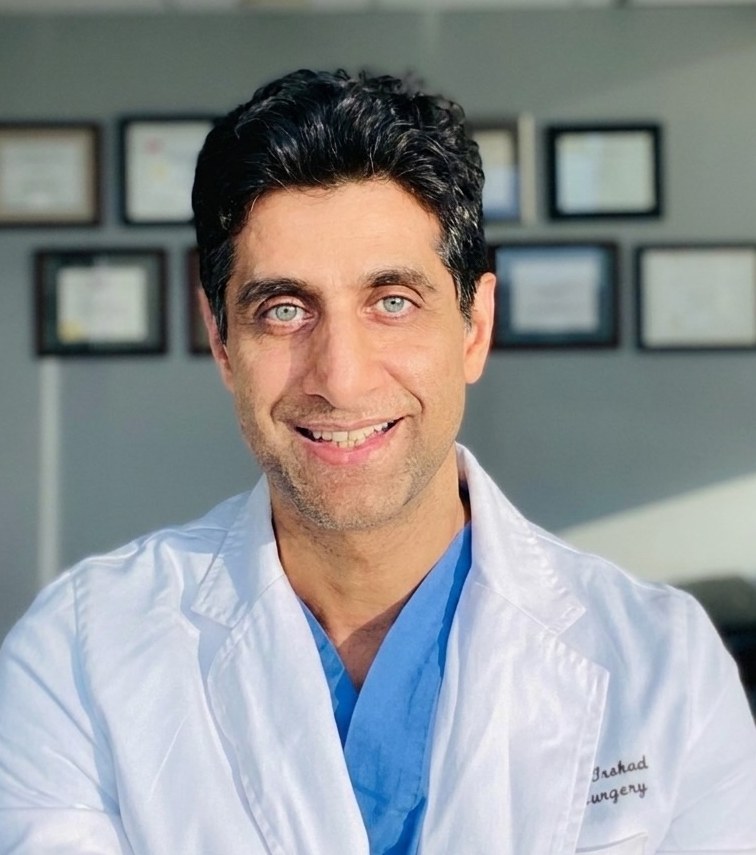
Written and medically reviewed by Dr. Kashif Irshad, MD, MSc, FRCSC · Last reviewed September 2026
When people first learn there’s a surgery for excessive sweating, the next question is almost always about cost. The good news is simple — and then there’s a more important point I want every patient to understand before they book.
What OHIP covers
ETS — the keyhole operation I perform for severe sweating — is an insured procedure in Ontario. For an appropriate candidate with a valid health card, there is no direct charge for:
- the surgical procedure itself,
- the anaesthetic, and
- the hospital visit.
These are billed directly to OHIP, not to you.
How this is different from Botox and miraDry
Other treatments for hyperhidrosis work differently when it comes to cost. Botox injections and miraDry are generally not covered by OHIP. Depending on your plan, some patients get partial support for these through private or workplace extended-health insurance — such as Blue Cross, Sun Life or Manulife — but that varies from plan to plan, so it’s worth checking directly with your insurer. ETS is the option that, for the right candidate, is an insured OHIP service rather than an out-of-pocket one.
Coverage isn’t the point — patient selection is
Here is the part I care about most. Because ETS is covered, some people want to go ahead simply because it’s “free” — and I understand the appeal. But being covered and being the right choice are two very different things. ETS is a highly effective operation for the right patient, and the wrong one for someone else. The single most important factor in a good result is careful patient selection.1
My job at the assessment is to work out, together with you, whether the benefits are likely to outweigh the risks in your particular situation — above all the risk of compensatory sweating, where the body can sweat more in other areas after the operation.1,2 No matter how appealing “covered by OHIP” sounds, I won’t recommend the surgery unless I believe it’s genuinely the right choice for you.
Who tends to be a good candidate — and who isn’t
Broadly, ETS tends to help most when the sweating is primary (not caused by another condition), focal — especially of the palms — severe, and hasn’t improved with first-line measures such as prescription antiperspirants. It’s less suitable in a number of other situations. Rather than generalise here, I’ve set out who is and isn’t typically a good candidate in more detail on the hyperhidrosis page and in Dr. Irshad’s Take. The self-assessment is a good first step before we meet.
How the process works
In practice it’s straightforward: you get a referral, we meet for an assessment, and if together we decide the benefits outweigh the risks for you, we proceed with the surgery through OHIP. If ETS isn’t the right fit, I’ll tell you that plainly and we’ll talk through the alternatives. You can also read an honest account of the trade-offs on the ETS risks page, and, if you live outside the province, coverage differs for out-of-province patients.
Common questions
Is ETS surgery covered by OHIP?
Will I have to pay anything?
Are Botox and miraDry covered?
Why do I need an assessment first?
References
- Cerfolio RJ, De Campos JRM, Bryant AS, et al. The Society of Thoracic Surgeons Expert Consensus for the Surgical Treatment of Hyperhidrosis. Ann Thorac Surg. 2011;91(5):1642–1648.
- Menna C, Ibrahim M, Andreetti C, et al. Long-term results of sympathectomy for palmar and axillary hyperhidrosis. Ann Cardiothorac Surg. 2016;5(1):26–32.