
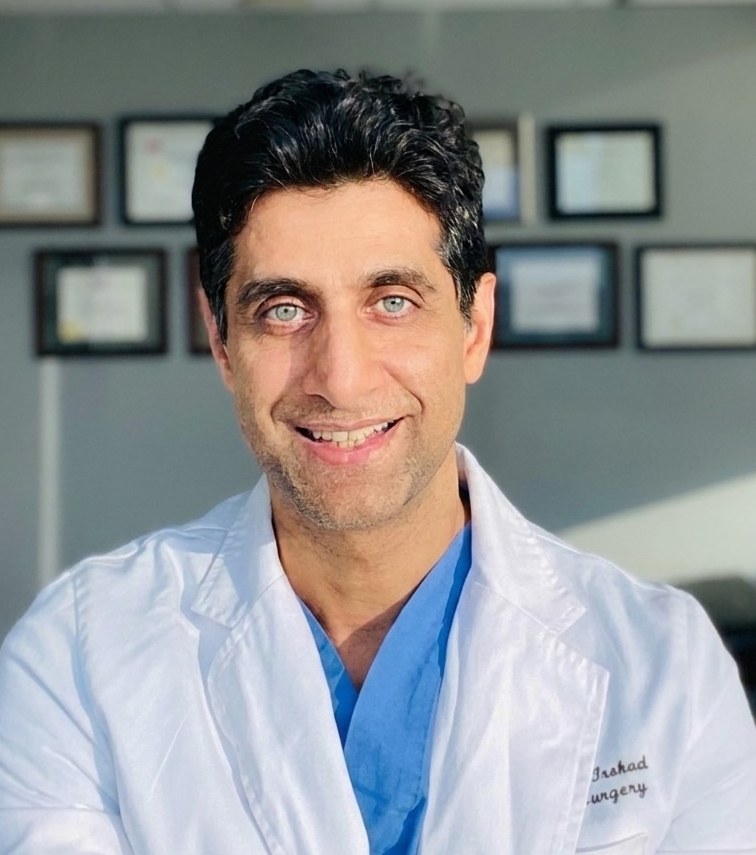
I perform ETS surgery for hyperhidrosis, and through the Toronto Sweat Clinic I also offer non-surgical treatments. miraDry is one of the treatments we perform most often at the clinic. That puts me in an unusual position: I see patients who are good candidates for each option, and I see what each one does well and where it falls short. Here is the balanced picture I give patients who ask me about miraDry.
What is miraDry?
miraDry is a non-surgical treatment for excessive underarm sweating. A handpiece delivers controlled microwave energy to the layer just under the skin where the sweat and odour glands sit, while cooling protects the skin surface. The heat destroys those glands, and destroyed sweat glands do not grow back. It is done in the office under local anaesthetic, takes about an hour, and most people need one or two sessions about three months apart.
The pros
1. A long-lasting result
Unlike antiperspirants or Botox, which need to be repeated, miraDry aims for a permanent reduction. In a randomized, sham-controlled trial, 89% of treated patients had their sweating reduced to a tolerable or unnoticeable level 30 days after treatment, compared with 54% of the sham group, and 69% still met that standard at 12 months.1 In a smaller study, sweat production fell by an average of 82%, and about 90% of patients were still at a tolerable level a year later.2
2. No surgery and little downtime
There are no incisions and no general anaesthetic. Most people return to work or school within a day or two, while the underarms settle.
3. No compensatory sweating
Because miraDry treats only the glands in the underarm, it does not carry the risk of compensatory sweating that comes with ETS surgery. The underarms hold only a small fraction of the body’s sweat glands, and the body does not need them to regulate temperature.
4. Less odour, and some hair reduction
miraDry also reduces the glands responsible for underarm odour, which many patients notice as much as the dryness. It also reduces underarm hair growth significantly, which many patients see as a welcome bonus.
5. Permanent, unlike Botox, and often more cost-effective
Botox works well for underarm sweating, but its effect wears off after several months and has to be repeated.3 Because miraDry is a one-time treatment (sometimes two sessions) with a permanent effect, I consider it a better long-term option than Botox for most people with underarm sweating, and over time it is usually more cost-effective than paying for injections again and again.
The cons
1. Underarms only
miraDry is designed for the underarms. It is not a treatment for sweaty hands, feet or face. For those areas, the options are different, and for severe hand sweating ETS may be considered.
2. A week or two of recovery
Swelling, soreness and tenderness in the underarms are expected and usually settle within one to two weeks. Bruising can occur, and some people notice small firm bumps under the skin that can last a few months before they resolve on their own.1,2
3. Tingling, numbness and skin darkening
Some people notice tingling or numbness in the underarm, the arm, or even the fingers. This is self-limiting: it settles on its own, though it can take weeks to a few months.1 miraDry can also cause some darkening of the skin in the treated area, which is more common in darker skin tones and also fades with time.
4. Not everyone is dry after one session
miraDry reduces sweating substantially, but the result is a reduction, not guaranteed complete dryness. Many people need a second session to get the result they want, and a small number do not respond as well as hoped.
5. Cost and coverage
miraDry is a private treatment and is not covered by OHIP. Some private insurance plans may cover part of the cost, so it is worth checking your benefits. Because it is a one-time treatment, the overall cost is usually lower than years of repeated Botox. You can read more about what is and isn’t covered in Is ETS surgery covered by OHIP?
6. It is permanent, and the research base is smaller
Permanence is usually a benefit, but it also means the treatment cannot be undone. And while the results are encouraging, miraDry has been studied in fewer and smaller trials than Botox or ETS, many of them supported by the manufacturer.
Who is miraDry a good fit for?
- People whose excessive sweating is mainly in the underarms.
- People who have tried clinical-strength or prescription antiperspirants without enough relief.
- People who want a long-lasting result instead of repeated Botox injections.
- People bothered by underarm odour as well as sweat.
When miraDry isn’t the right choice
- Sweating that is mainly in the hands, feet or face.
- Sweating that may be caused by another condition or a medication. That needs to be assessed first.
- People with an implanted electronic device such as a pacemaker or defibrillator, or who need supplemental oxygen.
- Anyone who isn’t comfortable with a permanent change, or with a week or two of underarm soreness.
miraDry vs. Botox vs. ETS
| miraDry | Botox | ETS surgery | |
|---|---|---|---|
| Areas | Underarms | Underarms, also hands and other areas | Hands and underarms; also feet in selected patients |
| How long it lasts | Permanent | Several months, then repeat | Long-lasting |
| What it involves | 1–2 office sessions, local anaesthetic | Injections in the office | Keyhole day surgery, general anaesthetic |
| Main downsides | Swelling, soreness; temporary tingling, bumps or skin darkening | Repeated treatments, injection discomfort | Compensatory sweating, surgical risks4 |
| OHIP | Not covered | Not covered | Insured for appropriate candidates |
My take
For excessive underarm sweating, I consider miraDry the best fit for most patients once prescription antiperspirants have not been enough. It is permanent, which Botox is not; it does not cause compensatory sweating; it reduces odour and hair; and over time it is usually more cost-effective than repeated injections. The trade-off is a week or two of soreness and some temporary side effects that settle on their own.
ETS surgery is still a legitimate option for underarm sweating, it is covered by OHIP for appropriate candidates, and we offer it. Because ETS carries the risk of compensatory sweating, we talk through that risk carefully before choosing surgery over miraDry.
Not sure how severe your sweating is? Try the HDSS self-assessment, read my detailed approach in Dr. Irshad’s Take, or learn more about miraDry at the Toronto Sweat Clinic.
Common questions
Is miraDry permanent?
Does miraDry hurt?
What are the side effects of miraDry?
How many miraDry sessions will I need?
Is miraDry covered by OHIP?
Does miraDry cause compensatory sweating?
References
- Glaser DA, Coleman WP 3rd, Fan LK, et al. A randomized, blinded clinical evaluation of a novel microwave device for treating axillary hyperhidrosis: the dermatologic reduction in underarm perspiration study. Dermatol Surg. 2012;38(2):185–191.
- Hong HC, Lupin M, O’Shaughnessy KF. Clinical evaluation of a microwave device for treating axillary hyperhidrosis. Dermatol Surg. 2012;38(5):728–735.
- Naumann M, Lowe NJ. Botulinum toxin type A in treatment of bilateral primary axillary hyperhidrosis: randomised, parallel group, double blind, placebo controlled trial. BMJ. 2001;323(7313):596–599.
- Cerfolio RJ, De Campos JR, Bryant AS, et al. The Society of Thoracic Surgeons expert consensus for the surgical treatment of hyperhidrosis. Ann Thorac Surg. 2011;91(5):1642–1648.