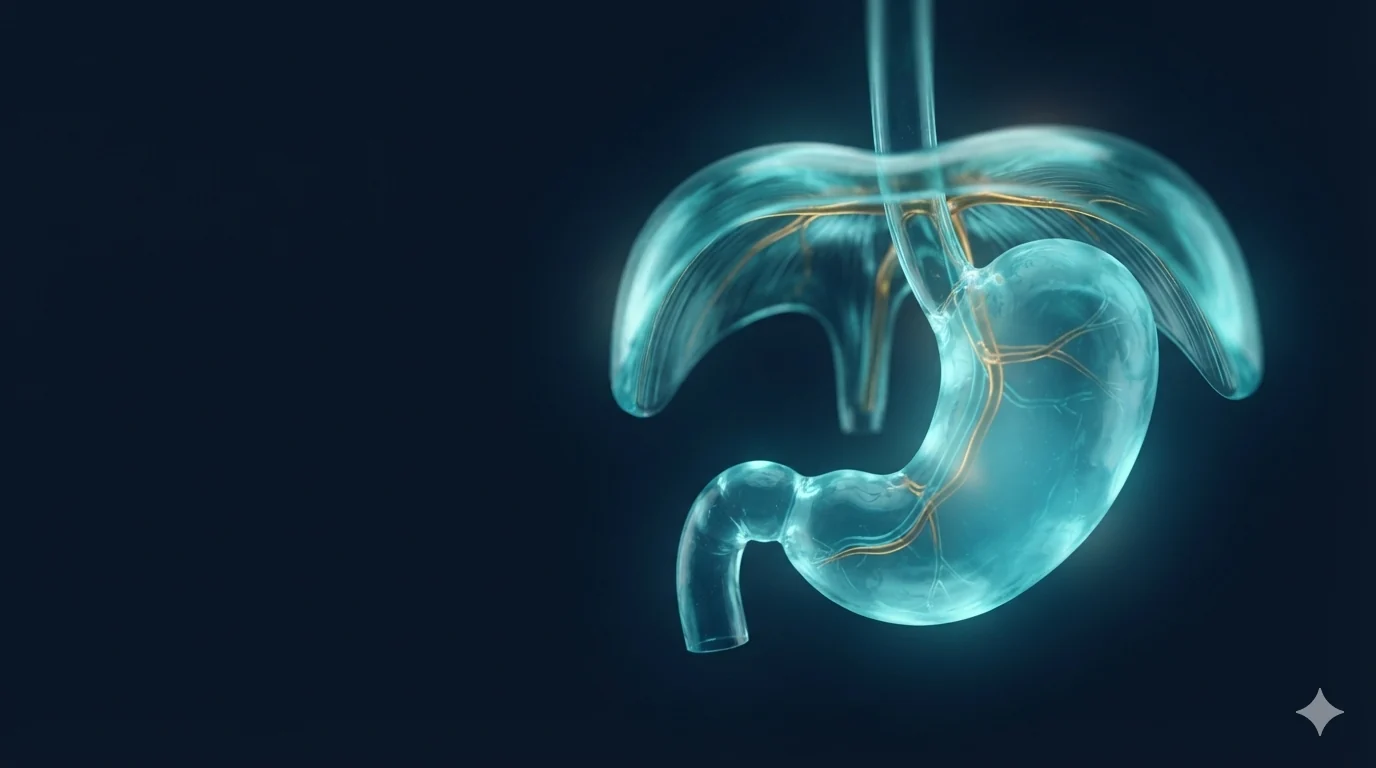
Patients often tell me the hardest part of deciding on surgery is not knowing what actually happens on the day. So here is a plain-language walk-through of the operation I perform, from the tests beforehand to the first weeks of recovery.
Before surgery: the right tests first
I confirm the problem before recommending an operation. That usually means an upper endoscopy to look at the lining of the esophagus and stomach and measure the hernia, and a barium swallow X-ray to show its size and shape. Where it will change the plan, I also arrange a manometry study, which measures how well the esophagus squeezes, and pH testing, which measures how much acid comes up. These tests decide which type of wrap suits you.
The operation, step by step
The surgery is done under a general anaesthetic, through a handful of small incisions in the upper abdomen, using a camera and fine instruments.
- Bring the stomach back down. I gently return the stomach to the abdomen and remove the hernia sac, the lining that has stretched up into the chest. Removing it fully exposes the anatomy and takes away tissue that would otherwise pull the repair back up.
- Free the esophagus. I release the esophagus well up into the chest so that a healthy length of it can sit comfortably below the diaphragm without tension.
- Close the opening in the diaphragm. I stitch the widened opening (the hiatus) closed around the esophagus with strong permanent stitches, reinforced with small felt buttresses called pledgets. If the tissue is weak and the opening doesn’t come together well, I add an absorbable mesh and may make a small relaxing incision in the diaphragm to take the tension off.
- Rebuild the valve (fundoplication). I wrap the top of the stomach around the lower esophagus to recreate a one-way valve that stops reflux. In most patients this is a full 360° Nissen wrap. If the esophagus squeezes weakly, I use a partial 270° Toupet wrap so swallowing stays comfortable.
- Anchor everything in place. I stitch the wrap to the diaphragm so it can’t slide back up. For large hernias, I may also stitch the stomach to the front of the abdominal wall (an anterior gastropexy) for extra security.
Occasionally, when years of reflux have shortened the esophagus, I lengthen it with a Collis gastroplasty rather than forcing the repair. And even very large hernias, where much of the stomach has moved into the chest, can almost always be repaired by keyhole surgery.
Nissen or Toupet: which wrap?
A full 360° Nissen wrap gives the strongest reflux control; a partial wrap (Toupet or Dor) still controls reflux well and is gentler on swallowing. I choose based on your symptoms and how well your esophagus moves food down.1 I explain exactly how I decide in Nissen, Toupet or Dor: how I choose your anti-reflux wrap.
After surgery: what recovery looks like
- In hospital: most people go home within a day or two. You start on liquids and are up walking the same day or the next morning. Pain is usually well controlled with simple medication.
- Weeks 1–2: a liquid, then soft and puréed diet. Eat slowly, chew well, and keep meals small.
- Weeks 3–4: a gradual return to normal foods. Some bloating is normal.
- About 6 weeks: back to all normal activities, including exercise. Avoid heavy lifting and straining until then, so the repair can heal.
Two things are common early on and usually settle over a few weeks. The first is some tightness when swallowing, caused by swelling around the repair; if it lingers, a simple stretching (dilation) resolves it. The second is gas-bloat: the new valve makes it harder to burp at first, so avoid fizzy drinks and gulping air. Full details are in the recovery guide, and the possible complications are listed on the risks page.
How well does it work?
In long-term studies, the large majority of patients, around 90%, report good, lasting relief of reflux after fundoplication, and many are able to stop their acid-reducing medication.1 For large hernias, the repair also relieves the pressure, pain and trouble swallowing they cause. Hernias can come back over the years, particularly very large ones, and the repair technique above is designed to keep that risk low.2 You can read more in Why do hiatus hernias come back?
Wondering whether you need surgery at all? Read When does a hiatus hernia actually need surgery?, take the reflux self-assessment, or see my detailed approach in Dr. Irshad’s Take.
Common questions
Is hiatal hernia surgery done by keyhole?
What is a fundoplication?
How long does it take to recover from hiatal hernia surgery?
Will I be able to burp after a fundoplication?
Is hiatal hernia surgery covered by OHIP?

References
- Stefanidis D, Hope WW, Kohn GP, et al. Guidelines for surgical treatment of gastroesophageal reflux disease. Surg Endosc. 2010;24(11):2647–2669.
- Kohn GP, Price RR, DeMeester SR, et al. Guidelines for the management of hiatal hernia. Surg Endosc. 2013;27(12):4409–4428.